
Sleeping Positions That Make Sciatica Worse – Try This Instead
Introduction
If you’ve ever been jolted awake by sharp pain shooting down your leg, you know how disruptive sciatica can be. Millions of people struggle with this condition, and while daily habits like sitting posture and exercise play a role, the way you sleep can also make a huge difference. The wrong sleeping position may worsen nerve compression, while the right adjustments can bring real relief.
This article will explain which sleeping positions aggravate sciatica, what you can do instead, and when it’s time to seek medical help. By the end, you’ll have practical tips you can use tonight for a better night’s sleep and less pain tomorrow.
What Is Sciatica?
Sciatica isn’t a condition on its own—it’s a set of symptoms caused by irritation or compression of the sciatic nerve, the longest nerve in your body. The sciatic nerve runs from your lower back, through your hips and buttocks, and down each leg.
When something presses on or inflames this nerve, the result can be pain, numbness, or tingling that radiates down one or both legs. Common causes include:
- Herniated discs
- Spinal stenosis (narrowing of the spinal canal)
- Degenerative disc disease
- Piriformis syndrome (tightness in the buttock muscle pressing on the nerve)
Sciatica affects people of all ages but becomes more common after age 30, especially in those with sedentary jobs or heavy physical labor.
Causes & Risk Factors
Several lifestyle and health factors increase the risk of developing sciatica:
- Poor posture – Sitting hunched over or standing with poor alignment strains the spine.
- Obesity – Extra weight adds pressure on the lower spine and nerves.
- Sedentary lifestyle – Lack of movement weakens muscles that support the spine.
- Occupational hazards – Jobs involving heavy lifting, twisting, or prolonged sitting.
- Age-related changes – Natural wear and tear can lead to herniated discs and spinal stenosis.
- Pregnancy – Increased body weight and hormonal changes may irritate the sciatic nerve.
Symptoms & Signs
Sciatica symptoms can range from mild discomfort to severe pain that disrupts daily life. Common signs include:
- Sharp or burning pain in the lower back, buttock, and leg
- Pain that worsens when sitting or lying in certain positions
- Tingling or “pins and needles” sensation in the leg or foot
- Muscle weakness in the affected leg
- Difficulty standing up after sitting
- Pain that radiates down one side of the body (rarely both)
Sleeping Positions That Make Sciatica Worse
While sleep should be restorative, certain positions may actually worsen nerve compression and aggravate sciatica pain:
- Sleeping on your stomach – This forces the spine into an unnatural arch, straining the lower back.
- Sleeping in a fetal position (curled tightly) – Can increase pressure on the lumbar discs.
- Flat on your back without support – Leaves a gap under the lower back, stressing the spine.
- Sleeping on a saggy or old mattress – Poor support causes misalignment of the spine.
Better Sleeping Positions – What to Do Instead
Fortunately, small adjustments can help relieve pressure and support healing:
- On your back with a pillow under your knees – This keeps the spine neutral and reduces nerve pressure.
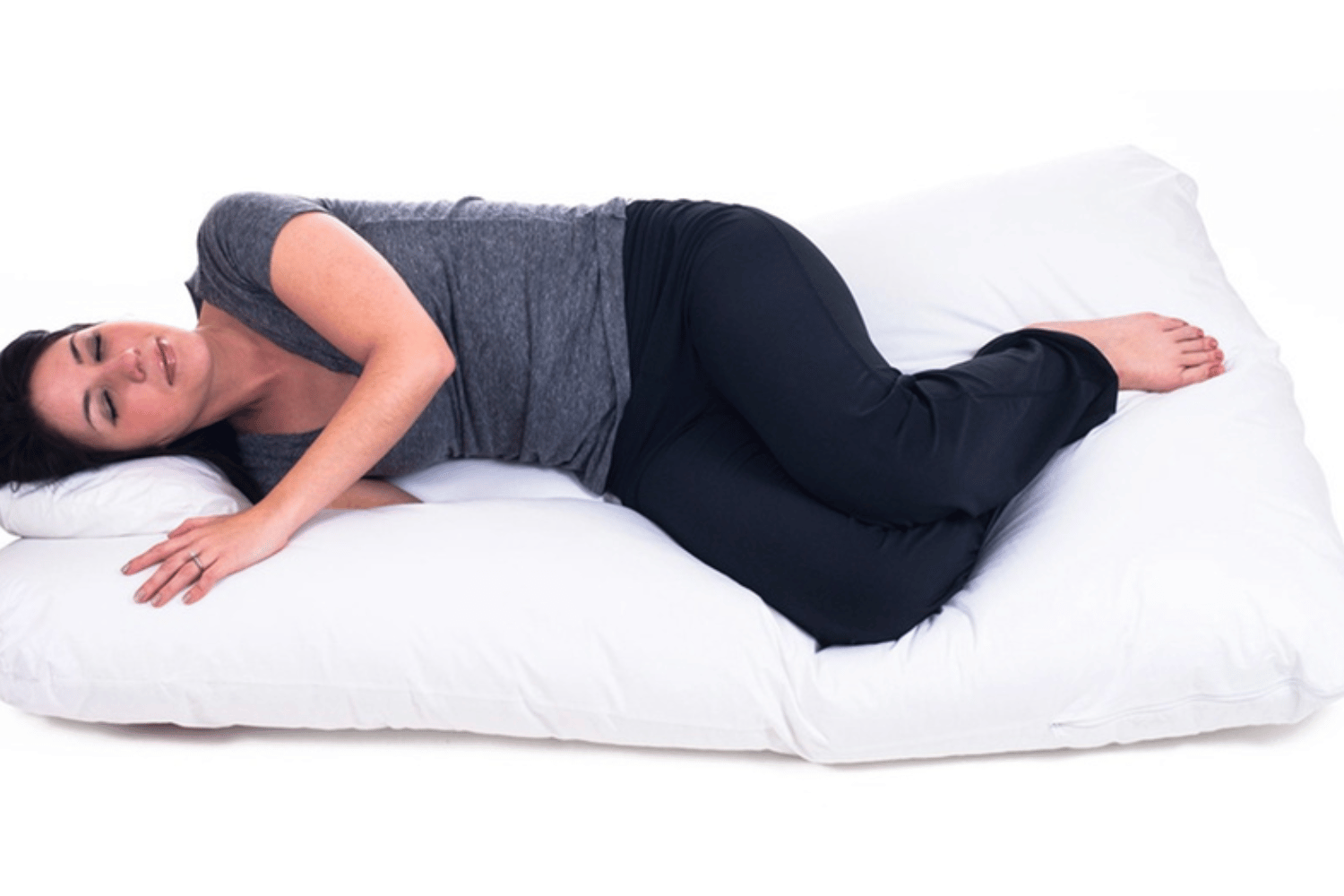
- On your side with a pillow between your knees – Aligns hips and spine, preventing rotation.
- Reclined position (with a wedge pillow or adjustable bed) – Beneficial if sitting relieves pain more than lying flat.
- Use a firm mattress – Provides better support than soft or sagging ones.
👉 Pro Tip: If you must sleep on your stomach, place a pillow under your pelvis to reduce strain on your lower back.
Prevention & Healthy Habits
Good sleep positions are only part of the solution. To prevent flare-ups:
- Stay active – Regular walking, yoga, or swimming strengthens core and back muscles.
- Stretch daily – Hamstring and piriformis stretches can reduce nerve tension.
- Maintain healthy weight – Less pressure on the spine means less irritation.
- Ergonomic seating – Use chairs with lumbar support and avoid prolonged sitting.
- Good lifting techniques – Bend at the knees, not the waist.
Treatment Options
Sciatica usually improves with conservative care, but treatment depends on severity.
At-Home / Natural Approaches
- Heat or cold packs for pain relief
- Gentle stretching and yoga poses
- Anti-inflammatory diet rich in omega-3s, fruits, and vegetables
- Proper hydration to support spinal discs
Medical Treatments
- Over-the-counter pain relievers (NSAIDs like ibuprofen)
- Physical therapy to strengthen supporting muscles
- Prescription medications for severe pain
- Corticosteroid injections for nerve inflammation
- Surgery (rare, last resort) if conservative measures fail
When to See a Doctor
Seek medical attention if you experience:
- Severe pain that doesn’t improve after a week of self-care
- Progressive leg weakness or numbness
- Loss of bladder or bowel control (medical emergency)
- Sudden, sharp pain after injury or accident
Conclusion
Your sleeping position could be making your sciatica worse without you realizing it. Avoid stomach sleeping and unsupported postures, and instead adopt positions that keep your spine neutral—such as sleeping on your side with a pillow between your knees. Combine this with healthy habits, regular exercise, and proper care, and you’ll be well on your way to more restful nights and less pain.